Free Things to Do in Copenhagen: A Real Budget Day
A real free day in Copenhagen: a pay-what-you-want walking tour, the noon guard change, royal gardens, free viewpoints and summer harbour baths.
 By Anders Nielsen, Copenhagen Museums Specialist & Cultural Guide
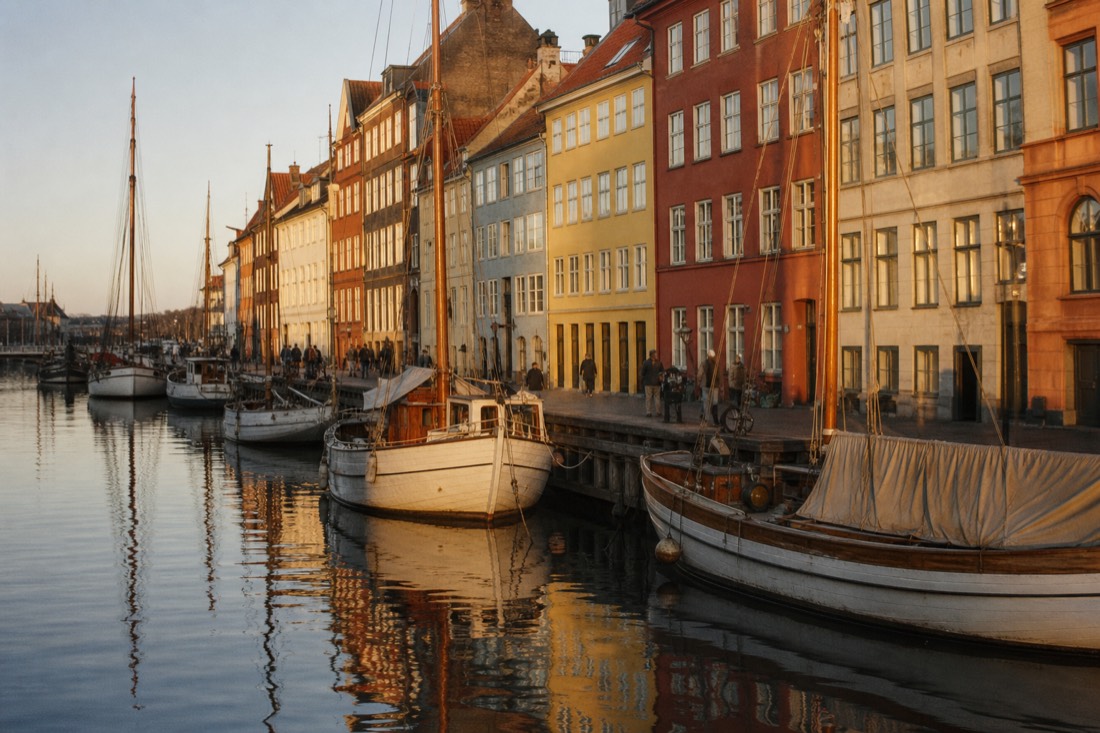
The cheapest good morning I know in Copenhagen starts on the steps of the red-brick city hall, where a guide with a bright green umbrella waits for whoever turns up. No ticket, no desk, no queue. From there you can walk for hours past palaces, canals and a royal guard changing on a cobbled square, and spend nothing at all until you decide the walk was worth a tip. I have lived here long enough to watch travellers arrive braced for one of Europe's priciest cities, then leave surprised at how much of it is simply open to anyone on foot.
This page is about free things to do, the activities rather than the collections. If your question is which galleries you can walk into without paying, that is a different and shorter list, and I have set it out on its own. Here the plan is a real budget day, the sort I would build for a friend arriving with more curiosity than cash: a pay-what-you-want walking tour at its centre, a noon spectacle at the palace, gardens and a harbour you can swim in, and a tower with the best view in the city that costs nothing to climb. Everything below is something you can genuinely do for free, checked against how the city actually works in 2026. For the wider picture of when to see what, the three-day museum itinerary slots these free hours around the paid highlights.
What can you actually do in Copenhagen for free?
Plenty, and most of it is outdoors. A pay-what-you-want walking tour, the changing of the guard at Amalienborg at noon, the royal gardens around Rosenborg, Nyhavn and the harbour front, the Marble Church, Assistens Cemetery, a free climb up the Christiansborg tower and, in summer, the harbour baths. One major museum, the David Collection, is free too.
Copenhagen rewards walking more than almost any capital I know, and that is where its free side lives. The set pieces most visitors pay to circle, the palaces and the water and the old town, are mostly things you experience from the outside, on your feet, for nothing. What costs money here is going indoors: through a museum door, up into a dome, onto a canal boat. Keep to the streets, the squares and the parks and the city hands you a full day. That is also why walking tours matter more here than in most capitals, because the free version of Copenhagen is an outdoor one, and the pay-what-you-want Grand Tour on GuruWalk is the cheapest way to have it explained instead of guessed at.
The trick is knowing what is free, what only looks free, and what is worth breaking the budget for. A dome you can enter but not climb without a fee. A tower that costs nothing while the round one nearby charges. A harbour bath that is free in July and shut in January. Below is the whole free menu at a glance, with where each one sits and when it is actually open, so you are not standing at a locked gate wondering what went wrong.
| Free thing | Where | When | Cost |
|---|---|---|---|
| Copenhagen Grand Tour (walking tour) | City hall steps, Radhuspladsen | Daily, about 2h30 | Pay what you want (tip) |
| Changing of the guard | Amalienborg palace square | Daily, around noon | Free |
| King's Garden (Kongens Have) | Around Rosenborg Castle | Daily, dawn to dusk | Free |
| Nyhavn and the harbour front | Nyhavn to the inner harbour | Anytime | Free |
| Marble Church (Marmorkirken) | Frederiksstaden | Church open daily | Free (dome climb paid) |
| Christiansborg tower viewpoint | Slotsholmen | Tuesday to Sunday | Free |
| Assistens Cemetery | Norrebro | Daily, daylight hours | Free |
| Islands Brygge Harbour Bath | Islands Brygge | About June to September | Free |
Is there a free walking tour in Copenhagen?
Yes, though the word free needs an honest asterisk. The Copenhagen Grand Tour is a pay-what-you-want walk: you join for nothing, and at the end you tip the guide whatever you thought the two and a half hours were worth. It is run by independent local guides and listed on GuruWalk, an outside platform, not by this site.
Here is exactly how it works, because the pay-what-you-want model confuses first-timers. You do not book a price and you do not pay to start. You show up at the meeting point, walk with the guide, and when it ends you hand over a tip that reflects how good it was. Most people give something in the range of 100 to 200 DKK, more if the guide was excellent, and nobody is turned away for giving less. That is the whole honest deal, and it is a genuinely good one for a careful budget.
The route itself is the reason I send people on it. Over about two and a half hours and fourteen stops it takes in Radhuspladsen, Nytorv and Gammel Strand, then Christiansborg, Hojbro Plads and Nikolaj Kirken, out to Kongens Nytorv and down Nyhavn, finishing near Amalienborg. That is most of the historic core in one loop, with a local explaining what you are looking at rather than a sign doing it. The tour runs in English and Spanish, meets at Kobenhavns Radhus on Radhuspladsen 1, and you find the guides on the city hall steps by their bright green umbrellas. It carries a 4.78 rating across 2,460 reviews, which for a walking tour is a strong and believable number, and the current start times sit on the Copenhagen Grand Tour listing on GuruWalk.
One walk is not the whole story, and that is the part most free-Copenhagen articles miss. Eight English-language walks run in this city on the same pay-what-you-want terms, and they are not variations of a single route. There is a two-hour version of the historic centre, a stand-up comedy telling of Danish history, the three-hour Hygge Tour listed on GuruWalk about how people actually live here, a crossing to Christianshavn and Christiania, a royal-quarter loop from Kongens Nytorv, and a walk through working-class Vesterbro. Every one of them is run by an independent local guide and listed on GuruWalk, an outside platform, never by this site, and in every case you decide at the end what the time was worth. Here they all are, with their ratings, running times and meeting points.
When is the changing of the guard at Amalienborg, and is it free?
Every day at noon, and it costs nothing to watch. The Royal Life Guard leaves its barracks near Rosenborg around half past eleven, marches through the city in tall bearskin caps, and reaches the Amalienborg square just before twelve for the handover. Stand on the cobbles, keep clear of the marching line, and the whole thing is yours for free.
This is the free set piece I would not skip, and the walking tour finishes close enough that you can catch it straight afterwards. The guards form up at their barracks on Gothersgade, by Rosenborg, and step off at about 11:30. If you want more than the ceremony itself, walk part of the route with them: they come down through the old streets with a certain unhurried theatre, and on days when the monarch is in residence a band plays them along.
The changeover happens on the great octagonal square between the four Amalienborg palaces, ringed by onlookers by five to twelve. You do not need a ticket, a tour or a good spot booked in advance, only the sense to leave the marching lane clear when the column arrives. VisitCopenhagen keeps the current details on its changing of the royal guards page, worth a glance in case the timing shifts for a state occasion. Watch it once and you will understand why it is on every free list of the city, mine included.
Are the King's Garden and Rosenborg gardens free to visit?
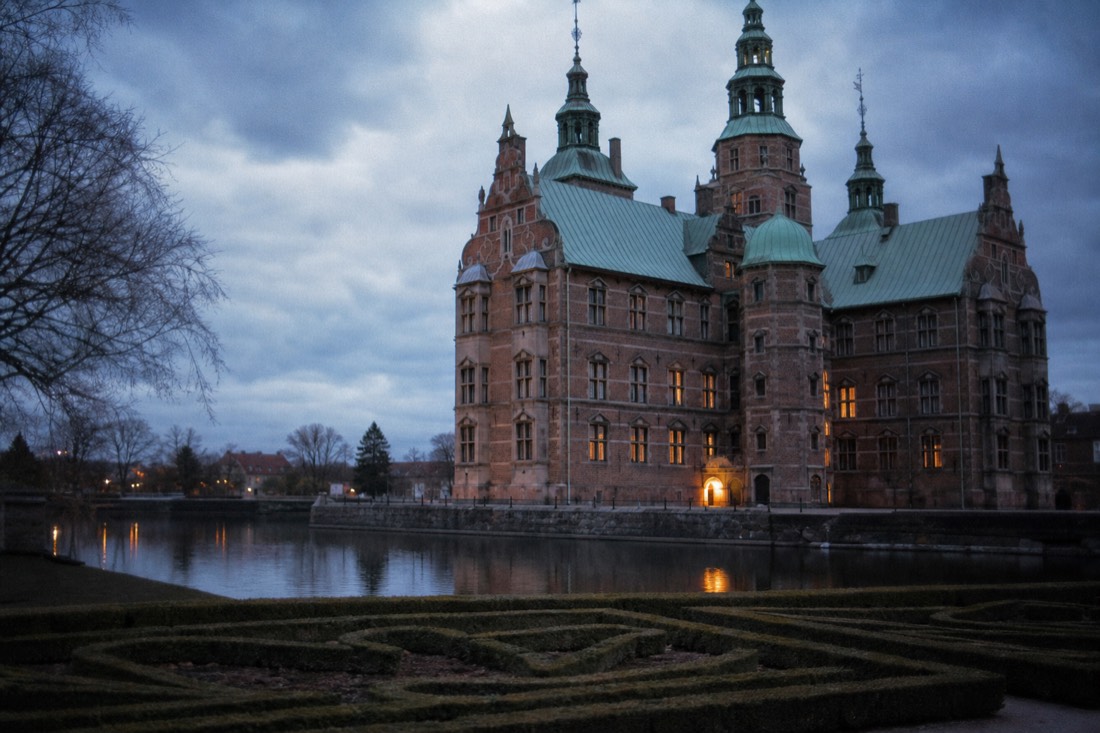
Yes. Kongens Have, the King's Garden that wraps around Rosenborg Castle, is Denmark's oldest royal garden and free to walk from morning until dusk. You pay only if you step inside the castle to see the crown jewels. The lawns, the rose garden, the long avenues of clipped trees and the herbaceous borders are open to everyone, every day.
On the first warm week of the year this garden fills with the whole city at once: office lunches on the grass, prams parked in rows, students with cheap wine and a speaker turned low. It is the closest thing central Copenhagen has to a shared back lawn, and it costs nothing to join. The formal parts are lovely too, the Renaissance rose garden and the perennial borders kept up as carefully as anything behind a paywall, but the pleasure is mostly in sitting where locals sit.
The castle at its heart, Rosenborg, is a paid ticket, and I will come back to what that money buys later. For a free hour, though, the garden is the point. Loop it on your way between the David Collection and the harbour and you have stitched two free things together with a third in the middle. Bring something to sit on if the ground is damp, which in this city it often is, and you have a picnic spot that a good many paying attractions cannot match.
If you would rather have this quarter explained than simply sat in, it is exactly the ground GuruWalk's Nordic Freedom Tours walk covers. It gathers at Kongens Nytorv, takes about two hours, and its stops run Nyhavn, Amalienborg, the Marble Church, Rosenborg and the King's Garden. Same pay-what-you-want deal as the others, same independent guide, though it is a newer listing with only 19 reviews behind its 4.53 rating, so read those before you hand it your morning. The garden itself stays free either way.
Is it free to see Nyhavn and the harbour front?
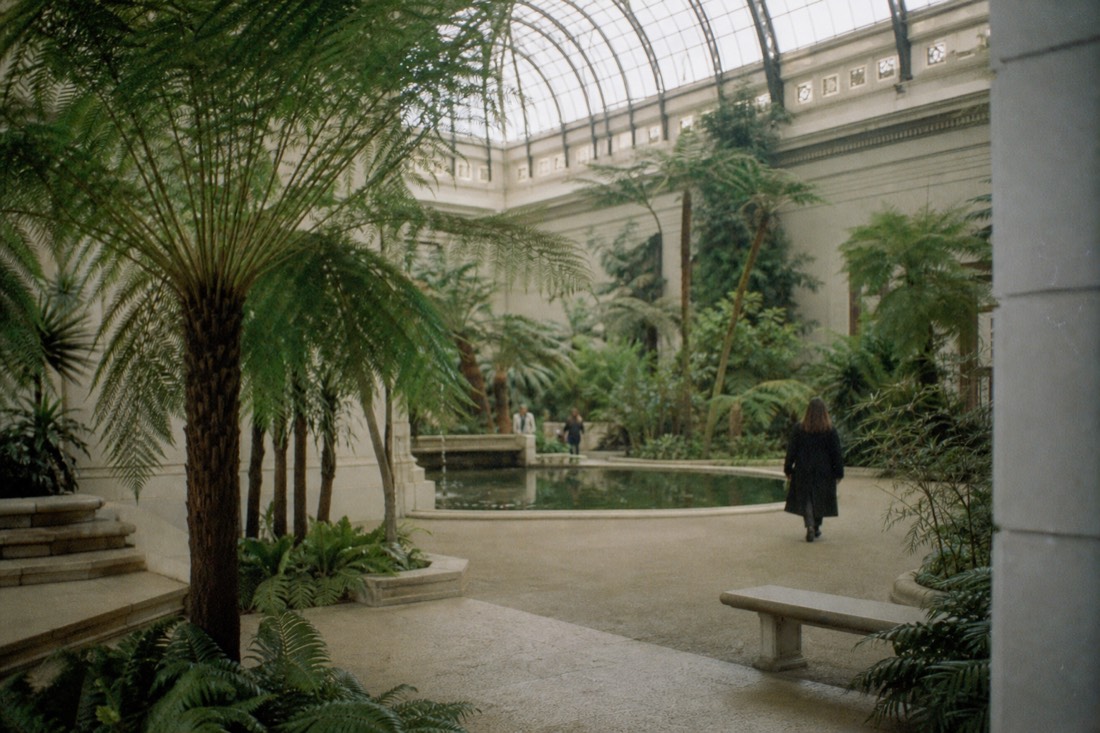
Completely. Nyhavn's row of painted merchant houses, the wooden boats along the canal and the wide harbour promenades are public space you wander at no cost. The walk from Kongens Nytorv over the Inderhavnsbroen cycle bridge to the far bank is one of the best free hours in Copenhagen, especially as the evening light drops across the water.
Nyhavn is the postcard, so it draws a crowd, but the crowd does not cost you anything and it thins the moment you keep walking. Stand at the canal mouth where the old anchor sits, then follow the harbour north. The inner harbour has been rebuilt for people rather than cargo, with promenades, swimming platforms and that low white cycle bridge that swings open for boats, all of it free to cross and linger on.
If you have an hour and no plan, this is the walk I would give you. Start at the Kongens Nytorv end of Nyhavn, cross to the Christianshavn side, and drift back along the water past the library and the old warehouses. It shows you the working, modern city that the museum quarter does not, and it costs a coffee at most. The light here late on a clear day is the reason half of Copenhagen's photographs exist, and none of them charged admission.
That crossing is also where the free walks stop being about palaces. Over the Inderhavnsbroen the city changes character: Christianshavn's canals, the corkscrew spire of the Church of Our Saviour, and beyond them Christiania, the self-governing freetown you can walk through as long as you respect its rules on photography. GuruWalk's Hippies and Christianshavn walk takes that route in about ninety minutes, meeting at Havnegade 54 by the end of Nyhavn, on the same tip-at-the-end terms. Want the canals and the churches without the Christiania stretch? The shorter Christianshavn Free Tour on GuruWalk starts instead from Hojbro Plads, under the Absalon statue, and runs a similar hour and a half.
Can you go inside the Marble Church for free?
Yes. Marmorkirken, the Marble Church a short block from Amalienborg, lets you step in under its enormous green copper dome at no charge during opening hours. Entry to the church is free. The only thing you pay for is the guided climb up into the dome itself, which runs on a limited daily schedule, so the interior alone is the free reward.
The dome is the draw, one of the largest in Northern Europe, and from directly beneath it the scale is hard to take in from photographs. You walk in off the street, look up, sit for a while in the cool, and walk out again, all for nothing. It lines up neatly with the guard change, since the church sits on the axis just behind Amalienborg, so a noon at the palace can roll straight into a free ten minutes under the dome.
The paid part, the climb to the outdoor gallery around the dome's base, is genuinely good on a clear day and modestly priced, but it keeps short and seasonal hours and is not the reason to come. Come for the interior, which is always free when the doors are open. Check the times before you build a plan around it, as a wedding or a service can close it to visitors for an hour, and it keeps shorter hours than a museum would.
What are the best free viewpoints in Copenhagen?
The best one is free. The tower of Christiansborg Palace, the tallest in the city at 106 metres, has an elevator up to a viewing platform with a 360-degree panorama, open Tuesday to Sunday at no charge since it opened to the public in 2014. On a clear day you can pick out the Oresund and the coast of Sweden. The nearby Round Tower is the paid alternative.
Most cities make you pay for the best view. Copenhagen, oddly, gives its tallest one away. You clear an airport-style security check at the base of Christiansborg, take the lift, and step out to the whole city laid flat below: the copper roofs and green spires, the harbour, Tivoli's outline, the bridges reaching to Sweden. There is a restaurant at the top if you want to linger, but the platform costs nothing and the view is the equal of anything ticketed. VisitCopenhagen lists the hours on its Christiansborg tower page; it closes Mondays like much of the city.
Here is where the one paid detour on this page earns its place. The walking tour passes Christiansborg from the street, and the free tower shows you the roof from above, but the palace beneath your feet is a working seat of state you only reach with a ticket. Going inside takes you into the royal reception rooms hung with tapestries and down to the ruins of the medieval castles under the courtyard, a genuinely different experience from the free view up top. If that appeals, book Christiansborg Palace ahead on a busy day. The crown jewels themselves are not here but over at Rosenborg, a separate paid ticket if regalia is what you came for. The Danish royal properties agency keeps the palace details on kongeligeslotte.dk. For everything else on this page, the free tower is enough.
| Free pay-what-you-want walk | A paid indoor ticket | |
|---|---|---|
| Cost | Nothing to join; tip about 100 to 200 DKK if you liked it | Roughly 100 to 160 DKK per adult, under-18 free |
| What you get | Streets, squares, palaces and canals from outside, with a guide's stories | Inside one place: rooms, ruins, collections, the crown jewels |
| Time | About 2 hours 30 on your feet | 1 to 3 hours at your own pace, mostly indoors |
| Weather | Best on a dry day | The rainy-day option, warm and covered |
| Booking | Just turn up at the city hall steps | Book ahead for the popular ones |
There is a third column that table leaves out: a local guide's knowledge at a price you set yourself. The walks cover the same outdoor ground you would otherwise wander alone past Slotsholmen and the old town, and the highest-rated English one in Copenhagen is the Comedy Walking Tour on GuruWalk, at 4.84 across 1,828 reviews. It gathers at Gammel Strand under an orange umbrella, two minutes from the tower entrance, and tells Danish history as stand-up around Christiansborg, Stroget, Kongens Nytorv, Nyhavn and Amalienborg. Two hours, English only, and you pay at the end what you thought it was worth.
Is Assistens Cemetery worth visiting, and is it free?
Yes to both. Assistens Cemetery in Norrebro is free and doubles as a leafy park where Copenhageners jog, read and sunbathe among the graves of Hans Christian Andersen and Soren Kierkegaard. It is a working cemetery, so keep the volume down, but there is nothing gloomy about a summer afternoon under its long avenues of lime trees.
This one surprises visitors, because a cemetery does not sound like a thing to do. In Copenhagen it is. Assistens has been the city's green lung on the Norrebro side for two centuries, and locals treat it as a park first and a burial ground second, walking dogs, cycling the gravel paths, spreading out on the grass in June. The famous graves are easy to find with the map at the gate, and standing at Andersen's simple stone is a quiet, free brush with the city's cultural history.
Go for the atmosphere as much as the names. The oldest quarters are overgrown and beautiful, the newer ones open and sunlit, and the whole place is free to wander in daylight. If you want the background before you go, the Assistens Cemetery entry lays out who is buried where and how the grounds became a park. Pair it with a walk along the nearby Lakes and you have a free half-day on the Norrebro side that most short visits miss entirely.
The same is true across the tracks in Vesterbro, where almost nothing is ticketed and almost nothing sits on a standard route. Istedgade, the old red-light stretch now half gentrified, the low white halls of the Meatpacking District, the terraced workers' housing on Skydebanegade and the square at Enghave Plads all read differently once somebody explains what they were built for and who lived in them. The Working-Class Copenhagen walk on GuruWalk covers exactly that in about ninety minutes from the main station, pay what you want at the end. It is a small listing, 26 reviews at 4.81 rather than a mass-market thousand, so expect a smaller group than the city-centre walks draw.
Can you swim in Copenhagen's harbour for free?
In summer, yes. The Islands Brygge Harbour Bath is a free public swimming spot cut straight into the clean inner-harbour water, open to all from roughly June to September with lifeguards on duty through the season. Five pools, three diving towers and a grassy lawn, all for nothing. Bring a towel, and check the weather before you make the trip.
That Copenhagen lets you swim in the middle of its harbour, for free, tells you something about how clean the water became. Islands Brygge is the original and best-loved of the harbour baths, a few minutes over the bridge from the centre on the Amager side. There are pools for adults and shallower ones for children, diving platforms at one, three and five metres, and a wide lawn behind them where half the neighbourhood picnics on a warm day. None of it charges admission.
The season is the catch. This is an open-air, unheated harbour bath, so it runs through the warm months and closes for winter, with lifeguards staffing it during the summer peak. Outside that window the pools are shut and the lawn is just a lawn. VisitCopenhagen keeps the current season and any advisories on its Islands Brygge harbour bath page. Time it right and a free swim with the city skyline behind you is one of the best hours a summer visit to Copenhagen offers.
Are any of Copenhagen's museums actually free?
A few, but fewer than old guides claim. The David Collection near the King's Garden is the one major museum free to all, every open day, with world-class Islamic and European art. Three more, Thorvaldsens, Nikolaj Kunsthal and the Copenhagen Museum, are free for everyone on the last Wednesday of each month, and many traditional museums admit under-18s free, while family attractions have separate age-based charges.
I keep this short here because the collections deserve their own page, and the news is not what most travellers expect. The old advice that the National Museum and SMK are free is out of date: both now charge adults. What remains genuinely free is smaller and more specific, led by the David Collection, a quiet townhouse of Islamic art a minute from Kongens Have that never asks for a krone. If a free museum is what you want, that is the one to build a morning around.
The full, honest breakdown, which went paid, the monthly free day, the under-18 rule that quietly saves families the most, sits in the free museums in Copenhagen guide, the natural companion to this page. If your trip is turning into two or three paid museums a day, the is the Copenhagen Card worth it guide works out where a pass beats buying tickets one by one. And for the paid collections and how they sit together, the wider copenhagen museums directory maps the lot. Between them you can decide, honestly, where a free hour ends and a ticket starts to earn its price.
How do you plan a full free day in Copenhagen?
Anchor it on the walking tour in the morning, catch the guard change at noon, then string the free sights together on foot: the King's Garden, the Marble Church, the free Christiansborg tower, Nyhavn as the light drops, and in summer a swim at Islands Brygge. Budget nothing but a tip for the guide, a coffee, and a good pair of shoes.
A real free day flows better if you group things by where they sit rather than chasing them across the map. The old town and Slotsholmen give you the walking tour, the tower and the harbour edge in one tight cluster. The stretch around Rosenborg hands you the gardens and the David Collection together. Frederiksstaden ties the guard change to the Marble Church and the promenade. Save Norrebro and Islands Brygge for a second, looser half-day when you want grass and water rather than cobbles. If all you have is a morning, the two-hour Historic Center walk on GuruWalk compresses that first cluster into two hours and finishes by handing over a map of local recommendations, which saves a good deal of guessing at lunchtime. It is pay-what-you-want like the rest, and it runs in English, Spanish and Italian.
Here is the same idea as a map you can plan against, by area, so you can see which free things share a corner of the city and which mean a short ride out. Nothing in this table costs anything to see, and everything on it is walkable from the nearest station shown.
| Area | Free things there | Nearest station |
|---|---|---|
| Indre By (old town) | Radhuspladsen, Nytorv, Gammel Strand, Hojbro Plads, Stroget | Norreport or Kongens Nytorv |
| Slotsholmen | Christiansborg tower, the ruins courtyard, library garden | Kongens Nytorv |
| Around Rosenborg | King's Garden, the rose garden, the David Collection (free) | Norreport |
| Frederiksstaden | Amalienborg guard change, the Marble Church, harbour promenade | Kongens Nytorv |
| Harbour and Nyhavn | Nyhavn, the Inderhavnsbroen crossing, the waterfront walk | Kongens Nytorv |
| Norrebro | Assistens Cemetery, the Lakes loop | Norreport or Norrebro |
| Islands Brygge | The harbour bath and its lawn (summer) | Islands Brygge (Metro) |
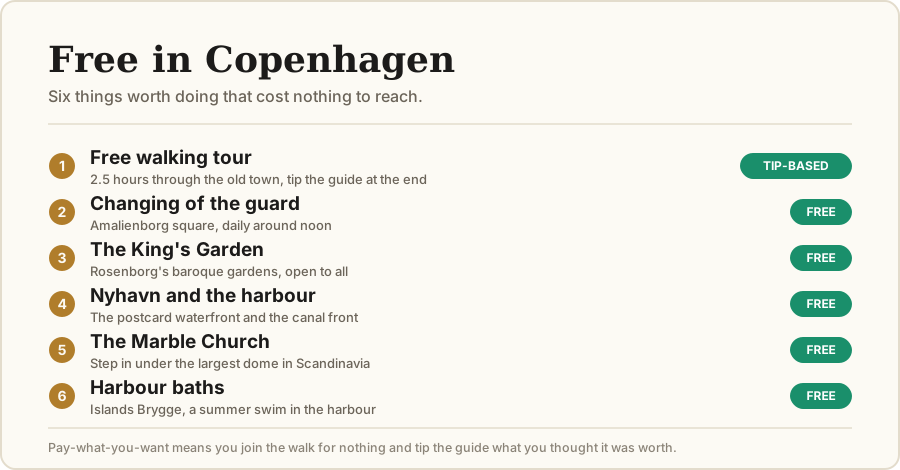
None of this depends on luck, only on timing a couple of things right. Land on a dry morning for the walk, a summer week for the swim, and any day but Monday for the tower, and Copenhagen turns out to be far kinder to a thin wallet than its reputation suggests. Spend where it counts, on one great indoor ticket when the weather sours, and let the streets, the water and the gardens carry the rest of the day for nothing.
Common questions about free things to do in Copenhagen
Is the Copenhagen walking tour really free?
It is free to join and pay-what-you-want to finish. You do not book a price or pay upfront; at the end you tip the guide whatever you felt the walk was worth, commonly 100 to 200 DKK. The Copenhagen Grand Tour is run by independent local guides and listed on GuruWalk, an outside platform, not by this site.
Where and when does the free walking tour start?
It meets on the steps of the city hall, Kobenhavns Radhus, at Radhuspladsen 1, where the guides stand with bright green umbrellas. It runs daily, lasts about two and a half hours, and covers roughly fourteen stops from Radhuspladsen through Christiansborg, Nyhavn and Amalienborg. Tours run in English and Spanish; check the current times on the listing before you go.
What time is the changing of the guard at Amalienborg?
Around noon every day. The Royal Life Guard leaves its barracks by Rosenborg at about 11:30, marches through the city, and reaches the Amalienborg square just before twelve for the handover. It is free to watch from the cobbled square. On days the monarch is in residence, a band usually accompanies the march.
Is the Christiansborg tower free, and is any tower view paid?
The Christiansborg Palace tower is free. It is the tallest in the city, has an elevator to a 106-metre viewing platform, and has cost nothing since it opened to the public in 2014, open Tuesday to Sunday. The Round Tower nearby charges a small admission. Going inside Christiansborg itself, into the reception rooms and ruins, is a separate paid ticket.
Can you swim in Copenhagen's harbour for free?
Yes, in summer. The Islands Brygge Harbour Bath is a free public swimming spot in the clean inner harbour, open to all from roughly June to September with lifeguards during the peak. It has pools for adults and children, diving towers and a grassy lawn. It closes for winter, so check the season before making the trip.
Are there any genuinely free museums in Copenhagen?
A few. The David Collection, with its world-class Islamic art, is free to all on every open day. Thorvaldsens, Nikolaj Kunsthal and the Copenhagen Museum are free for everyone on the last Wednesday of each month, and many traditional museums admit under-18s free, while family attractions have separate age-based charges. The National Museum and SMK, once free, now charge adults.
How much money do you need for a day of free things?
Very little. The walk asks only a tip, and the guard change, gardens, Marble Church interior, Christiansborg tower, Nyhavn walk and summer harbour bath are all free. Realistically you spend on a coffee, lunch and transport, plus the tip. One paid indoor ticket, on a rainy afternoon, is the only real cost if you want it.
What is the best free thing to do if it rains?
Rain thins the free outdoor list, since the walk, gardens and harbour bath all want dry weather. The free indoor options are the Marble Church interior and, on a clear enough day, the covered Christiansborg tower platform. Otherwise this is when a single paid ticket earns its keep: pick one great indoor museum rather than fight the weather.
Would You Add Stories Or An Indoor Palace Visit?
General recommendation; adjust it below for your plans.
Have your Copenhagen date in mind? Check Copenhagen Folklore Audio Walk before arranging the rest of your itinerary.
Self-guided English audio, about 95–190 minutes. Central Station to Højbro Bridge via Copenhagen folklore landmarks. Smartphone and headphones required; no museum admission or transport.
Compare Options And Adjust My Plan
Choose the experience you want, then check its exact option, language, party ages and dates with the provider. This tool does not confirm availability or individual eligibility.
Viator scheduled dates. Availability and final price are confirmed on Viator.
Choose a date to inspect the published schedule. You can also continue directly to Viator.