Copenhagen in 3 Days: A Museum-Lover's Itinerary
A day-by-day museum itinerary for Copenhagen in 3 days: a Slotsholmen palace day, an art day and a coastal day trip, with 2026 prices, hours and the Copenhagen Card maths.
 By Anders Nielsen, Copenhagen Museums Specialist & Cultural Guide

On the first morning of a three-day plan I usually walk people onto the little bridge at Slotsholmen and just let them look. To the left, the green copper roofs of Christiansborg. Behind us, the old stock exchange spire. Under our feet, a canal that has carried royal barges for four hundred years. Copenhagen packs its biggest museums onto one small island and a couple of nearby streets, and once you see how tightly they sit, the whole trip stops feeling like a race.
I have built this itinerary for people who love museums but do not want to spend a city break sprinting between them. The trick here is geography, not stamina. Cluster the sights that share a neighbourhood, keep to two to four major museums a day, and leave the day trip for last when your legs have warmed up. This is the version I hand visitors before they arrive: three days, grouped by area, with real 2026 prices, the opening days that will trip you up, and the pass that quietly pays for itself.
Can you really see Copenhagen's best museums in 3 days?
Yes, comfortably, if you group them by neighbourhood instead of chasing a checklist. Three days is enough for two focused museum days in the centre plus one coastal day trip, at a pace of two to four major museums a day. The city is compact and walkable, and most headline collections sit within a few streets of each other.
The planning rule I lean on comes straight from how local itineraries are built: a two-to-three day visit realistically holds one or two museum-focused days, fitting two to four major museums each when they are clustered well. Try to cram in six and you will remember corridors, not collections. The official city tourism board makes the same point across its VisitCopenhagen itineraries, which favour tight geographic loops over a scattered dash across town.
What makes Copenhagen forgiving is the layout. The royal palaces and the national collections gather on and around Slotsholmen, the small island at the heart of the old city. The art museums fan out just north and west of there. Only the day trip asks you to board a train, and even that runs on the same transport zones as the city buses. So the structure of this plan is simple: Day 1 is the palace-and-power island, Day 2 is art, and Day 3 is the coast. Swap the order to suit the weather, since one wet forecast can decide everything.
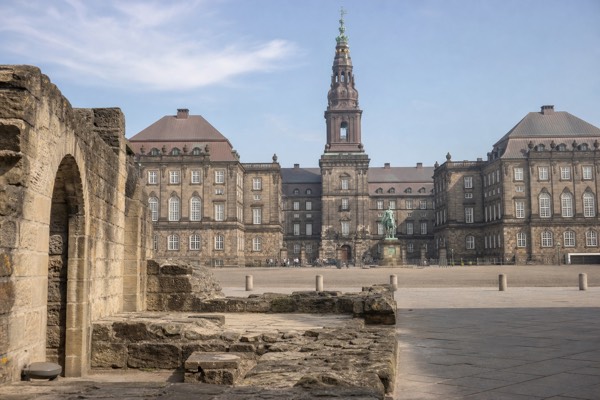
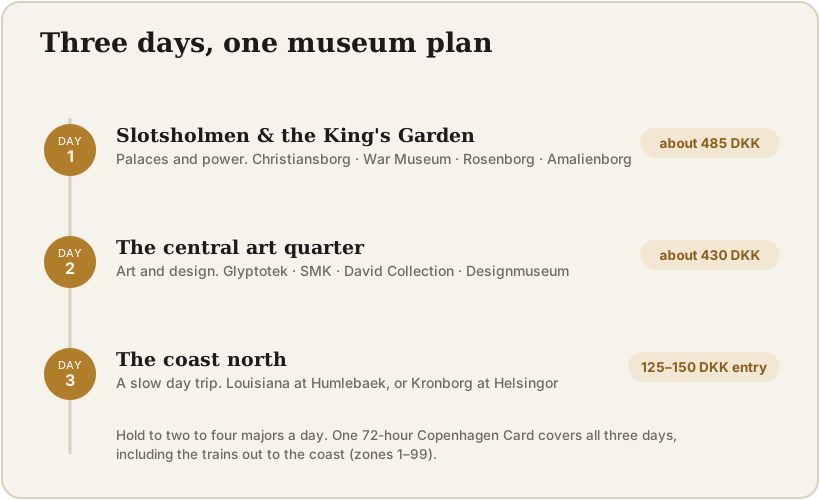
Here is the shape of the three days at a glance, before we walk through each one.
| Day | Area | Main stops | Pace |
|---|---|---|---|
| Day 1 | Slotsholmen and the King's Garden | Christiansborg, War Museum, Rosenborg, Amalienborg | Palaces and power |
| Day 2 | Central art quarter | Glyptotek, SMK, David Collection, Designmuseum | Art and design |
| Day 3 | The coast north | Louisiana at Humlebaek, or a castle at Helsingor | A slow day trip |
Day 1: which museums are on Slotsholmen?
Slotsholmen holds Christiansborg Palace, the Danish War Museum and Thorvaldsens Museum within a two-minute walk of each other, and Rosenborg Castle sits a short stroll north in the King's Garden. Start with Christiansborg's reception rooms and ruins, add the War Museum next door, then walk up to Rosenborg's crown jewels in the afternoon.
Begin at Christiansborg, the seat of Danish power, where a single full ticket covers the Royal Reception Rooms, the medieval ruins under the courtyard, the royal kitchen and the stables. The Palace Ticket for all areas runs 215 DKK online, or 140 DKK if you only want the reception rooms, and under-18s enter free. Climb the tower first if the queue is short, since the view over the copper rooftops sets the whole day in context. You can check the layout and current openings on the palace pages at kongeligeslotte.dk.
Two doors along stands Krigsmuseet, the Danish War Museum, in Christian IV's 1604 Royal Arsenal. Its ground floor is a 163-metre cannon hall, and the upper floors carry five centuries of Danish military history. Entry is 130 DKK, 117 online, and it is quieter than the palace next door. If you have energy left, Thorvaldsens Museum sits just across the little bridge, though note its main painting collection is off view during 2026 with only a small basement selection showing.
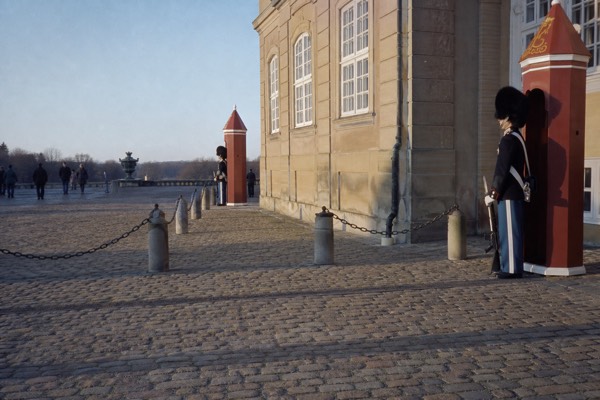
Around midday, walk ten minutes north to the King's Garden and Rosenborg Castle. This is the highlight for many visitors: a moated 17th-century summer palace whose treasury holds the Danish crown jewels and coronation regalia. Tickets run 140 DKK online, and they are sold by time slot, so a quick reservation saves you a wait. End the afternoon at Amalienborg, the royal family's winter home, a ten-minute walk east, where the guard changes on the square at noon.
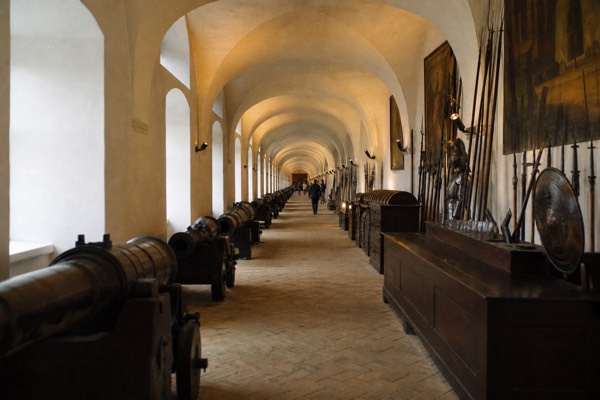
| Day 1 stop | What you get | 2026 adult | Suggested time |
|---|---|---|---|
| Christiansborg Palace | Reception rooms, ruins, tower, stables | 215 DKK (all areas) | 90 min |
| Danish War Museum | Cannon hall, 500 years of arms | 130 DKK | 60 min |
| Rosenborg Castle | Crown jewels, royal interiors | 140 DKK online | 75 min |
| Amalienborg | Royal apartments, guard change | 125 DKK online | 45 min |
Day 2: where are the best art museums clustered?
The central art quarter runs from the Ny Carlsberg Glyptotek behind Tivoli up to SMK by the Botanical Garden, taking in the free David Collection and the Designmuseum on Bredgade. All four sit within a twenty-minute walk, so a second day of art needs no transport at all beyond your own feet.
Open at the Glyptotek, the brewer Carl Jacobsen's collection of ancient Egyptian, Greek and Roman sculpture wrapped around a domed winter garden of palms. It holds a strong run of French and Danish painting too, with Rodin bronzes and a room of Degas. Entry is 150 DKK, 135 online, under-18s free, and it is closed Mondays. One honest caveat for 2026: the antique galleries are being rearranged until the first of October, so a few rooms may be shut. The current state is posted at glyptoteket.com.
From there it is a pleasant walk north to SMK, the National Gallery of Denmark, by the Botanical Garden. This is the country's largest art museum, running from old masters through the Danish Golden Age to modern French and Danish work. General admission is 140 DKK, under-27s pay 95, and under-18s go free. It also closes Mondays, so if your Day 2 lands on a Monday, flip it with the day trip. Break the walk between the two at the David Collection on Kronprinsessegade, a townhouse holding one of the world's finest Islamic art collections and free to enter all year, which makes it the best value stop in the whole itinerary.
Round the day off at Designmuseum Danmark on Bredgade, the home of Danish Modern, where a famous corridor of chairs traces the movement that gave the world the shapes in half the world's cafés. Entry is 140 DKK, and it usually closes Mondays except in high summer. For a fuller sweep of the city's galleries, my art museums in Copenhagen guide lays them all out by type and mood.
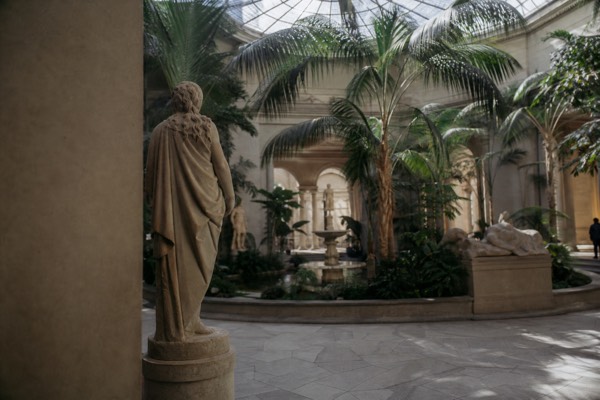
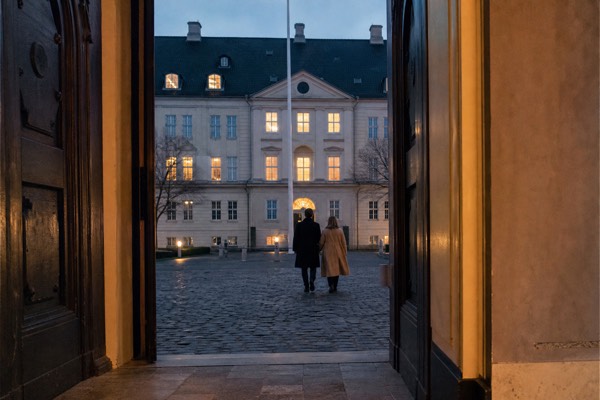
Day 3: which day trip from Copenhagen is best?
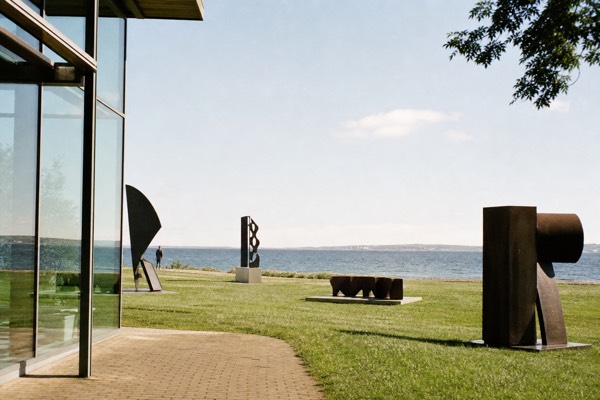
The strongest third day is the Louisiana Museum of Modern Art at Humlebaek, a modern-art museum on the Oresund coast about forty minutes north by train. If castles pull you more than paintings, ride the same line to Kronborg at Helsingor, Hamlet's fortress, or branch inland to Frederiksborg at Hillerod. All three share the Copenhagen Card's transport zones.
Louisiana is the day trip I recommend first, and not only for the art. The low glass building runs galleries straight out onto a sculpture park above the sea, with Calder mobiles and Henry Moore bronzes on the lawn and Sweden visible across the water. Adult entry is 145 DKK, under-18s free, and it opens late, to 22:00, Tuesday through Friday. The catch is Monday, when it closes, so never put this leg on a Monday. Full logistics live in my Louisiana Museum day trip guide, and there is an honest verdict in the blog on whether the Louisiana Museum is worth visiting.
Prefer history to modern art, and the same coastal Kystbanen line carries you on to Helsingor for Kronborg Castle, the Renaissance fortress Shakespeare turned into Elsinore in Hamlet and a UNESCO World Heritage site. Entry is 150 DKK, 135 online, and the casemates below hold the sleeping statue of Holger the Dane. A short branch line inland instead reaches Frederiksborg Castle at Hillerod, the grandest Renaissance castle in Scandinavia, set on three islets in a lake, with a free app audio guide bundled into the 125 DKK ticket and the reassurance of being open all 365 days including Mondays.
Whichever you choose, the day runs the same way. Catch a mid-morning train, arrive soon after opening, take the collection slowly, and ride back in the early evening. Because these sights sit inside transport zones 1 to 99, one Copenhagen Card can cover the train out and the entry at the end of it, which is where a three-day pass starts to earn its keep.
| Day 3 option | Where | Train time | 2026 adult | Closed day |
|---|---|---|---|---|
| Louisiana Museum | Humlebaek | ~40 min | 145 DKK | Monday |
| Kronborg Castle | Helsingor | ~45 min | 150 DKK | Seasonal, check ahead |
| Frederiksborg Castle | Hillerod | ~40 min | 125 DKK | Open 365 days |
How much does three days of museums cost?
Paid one by one, three days of major museums easily runs 900 to 1,200 DKK a person before transport. A 72-hour Copenhagen Card at 1,039 DKK covers entry to more than 80 attractions plus all public transport across zones 1 to 99, including the trains out to the day-trip castles, so it usually wins once you visit three or more paid sights a day.
The pay-as-you-go maths adds up quickly. A palace, a castle and a couple of art museums each day, at roughly 130 to 215 DKK apiece, lands most people well past a thousand kroner across three days, and that is before you buy a single train ticket. Buy separately and you also lose time at each ticket desk, which on a tight three-day plan is its own cost.
The Copenhagen Card flips that. The 2026 Discover prices run 589 DKK for 24 hours, 859 for 48, 1,039 for 72, 1,219 for 96 and 1,419 for 120. Against a plan like this one, the 72-hour card is the natural fit: it folds the palaces, the art museums, the day-trip train and the day-trip entry into one flat price. The current inclusions are listed on the official Copenhagen Card site. One honest exception matters for families: the Blue Planet aquarium is not on the card, so if the aquarium is a must, budget it apart. For the full break-even reasoning, see my is the Copenhagen Card worth it guide.
Here is how a single adult's three days compare, counting only the sights in this itinerary.
| Cost item | Pay as you go | Copenhagen Card 72h |
|---|---|---|
| Day 1 palaces (three sites) | ~485 DKK | Included |
| Day 2 art museums (three paid) | ~430 DKK | Included |
| Day 3 day-trip entry | 125-150 DKK | Included |
| Public transport and day-trip train | Paid separately | Included |
| Card price (adult) | 0 DKK | 1,039 DKK |
Which museums are open on which days?
The single scheduling trap is Monday. Glyptotek, SMK, Thorvaldsens and Louisiana all close on Mondays, while the palaces, the National Museum in season, the Blue Planet, the Experimentarium and Frederiksborg stay open. Put your palace day or the science-and-aquarium options on Monday, and save the art quarter and Louisiana for any other day.
More of Copenhagen's museums close on Mondays than most first-time visitors expect, and building a plan without checking that costs people whole mornings. The good news is that the closures fall into a clean pattern. The classic art museums rest on Mondays. The royal palaces and the family science venues generally do not. So a Monday arrival is not wasted, it just steers the order of your three days.
If your trip starts on a Monday, run the palace day first, or fold in the two big family draws that stay open, the Blue Planet aquarium and the Experimentarium science center. Keep the Glyptotek, SMK and Louisiana for Tuesday onward. Designmuseum is the one to watch: it usually closes Mondays but opens daily in high summer, from the sixth of July to the end of August in 2026. The grid below covers the museums in this plan.
| Museum | Monday | Typical hours |
|---|---|---|
| Christiansborg Palace | Open | Daily 10-17 (30 Mar-1 Nov) |
| Rosenborg Castle | Open in season | 10-17, summer from 09 |
| National Museum of Denmark | Open Apr-Oct | Daily 10-17 |
| Ny Carlsberg Glyptotek | Closed | Tue-Sun 10-17, Thu to 21 |
| SMK, National Gallery | Closed | Tue-Sun 10-18, Wed to 20 |
| Designmuseum Danmark | Closed except summer | 10-18, Thu to 20 |
| Louisiana Museum | Closed | Tue-Fri 10-22, weekend 10-18 |
How do you adjust the plan for rain, kids or a fourth day?
Keep the structure, swap the contents. If rain sets in, pull the day trip forward or back and spend a wet day among the fully indoor central collections. Travelling with children shifts the balance toward the Experimentarium, the Blue Planet and the National Museum's Children's Museum. A fourth day is best spent at a second castle or the quirky underground and tower sights.
Weather is the one thing that should bend this itinerary. Louisiana is half garden, so a grey, blustery forecast is a reason to move the coast day and stay central. On a wet day the Glyptotek's palm-domed hall, the National Museum and SMK carry you through hours without stepping outside, and my rainy day in Copenhagen guide chains them into a route that barely touches the pavement.
Families should tilt the plan, not rebuild it. Children under 18 enter almost every museum here for free, so the cost stays low, and swapping one palace for the Experimentarium's hands-on floors or the Blue Planet's ocean tank keeps younger visitors invested. The full family version, with ages and timings, is in my museums in Copenhagen for kids guide. If you have a fourth day, use it for a second castle or for the odder corners of the city, the spiral ramp of the Round Tower and the dripping art cisterns under Sondermarken, which reward a slower, curiosity-led wander.
How do you keep three museum days from blurring together?
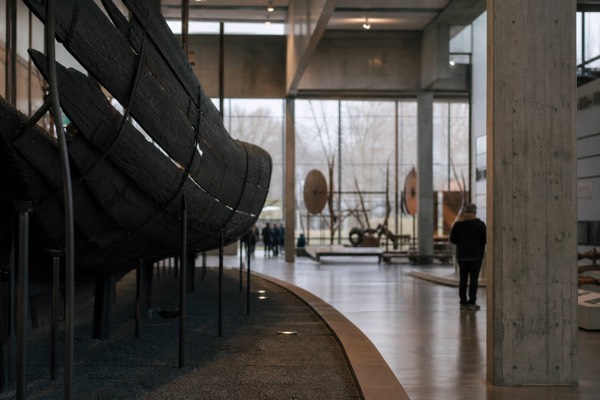
Pace beats volume. Choose one anchor museum a day to see properly and treat the rest as lighter add-ons, break for a real lunch away from the galleries, and stop when your feet have voted rather than forcing a fifth sight in. Two to four major museums a day is the ceiling, not a target to hit every time.
The most common mistake on a three-day museum trip is not seeing too little, it is seeing too much. After the fourth grand interior in a day, rooms start to blur and nobody remembers which crown belonged to which king. I plan each day around a single anchor, Christiansborg on Day 1, the Glyptotek on Day 2, Louisiana on Day 3, and let everything else orbit it as a shorter, optional stop. That way the day has one clear memory at its centre rather than five half-formed ones.
Food does more work here than people expect. A proper sit-down lunch, ideally away from the galleries in a café or one of the food halls, resets attention far better than a rushed pastry on a bench. The museum cafés at the Glyptotek and Louisiana are good enough to build a break around, and stepping outside the exhibition rooms for an hour is what lets the afternoon feel fresh rather than dutiful.
The last piece is knowing when to quit. If the group is flagging by mid-afternoon, drop the optional stop and swap it for a canal, a garden or a coffee, since a forced final museum rarely lands. Copenhagen is compact enough that you can always come back tomorrow, and a plan with a little slack in it beats a packed one that ends in exhaustion. Hold to two to four majors a day and the three days stay distinct in memory long after you fly home.
Know before you go
Book time-slot tickets for Rosenborg and Christiansborg ahead, avoid stacking the Monday-closed art museums on a Monday, and decide early whether a 72-hour Copenhagen Card fits your plan. Wear shoes made for walking, since this itinerary moves between sites on foot, and check each day-trip museum's calendar before you commit the coast day.
A little sequencing saves the most grief. The royal palaces sell timed entry, so a same-morning slot can sell out on a busy weekend, and it costs nothing to reserve the day before. The Monday pattern is the other thing to lock in first, because one museum closure can unravel an afternoon if you notice it at the door rather than at breakfast.
Two practical notes round it out. This plan is built to be walked, with only the third day on a train, so comfortable footwear matters more than any ticket. And since the coast day rides on the same transport zones as the city, a card bought for the palaces on Day 1 is already paying for the train on Day 3. For the deeper comparison between the sightseeing card and a plain transport pass, see my guide on the Copenhagen Card versus the City Pass.
Common questions about a 3-day Copenhagen museum itinerary
Can you see Copenhagen's main museums in three days?
Comfortably, if you group them by neighbourhood rather than chasing a checklist. Three days holds two focused museum days in the centre plus one coastal day trip, at two to four major museums a day. The headline collections cluster on and around Slotsholmen, so most of the moving between them is done on foot.
How many museums should you fit into one day?
Two to four majors is the realistic ceiling, not a target. Past the fourth grand interior the rooms blur and nobody remembers which crown belonged to which king. Pick one anchor museum a day to see properly, treat the rest as lighter add-ons, and break for a real lunch away from the galleries.
Is a 72-hour Copenhagen Card worth it for three museum days?
For a plan like this one, usually yes. Paid one by one, three days of major museums runs roughly 900 to 1,200 DKK a person before transport, while the 72-hour card is 1,039 DKK and covers more than 80 attractions plus all zone 1 to 99 transport, including the day-trip train.
What if one of your three days falls on a Monday?
Reorder rather than rewrite. The Glyptotek, SMK, Thorvaldsens and Louisiana all close on Mondays, while Christiansborg, Rosenborg, the National Museum in season, the Blue Planet, the Experimentarium and Frederiksborg stay open. Run the palace day first, or use the family science venues, and save the art quarter and the coast for later.
Which day trip works best on the third day?
Louisiana at Humlebaek is my first pick, about forty minutes north by train, with galleries running out onto a sculpture park above the Oresund and adult entry at 145 DKK. Prefer castles, and the same coastal line reaches Kronborg at Helsingor for 150 DKK, or a branch line inland reaches Frederiksborg at Hillerod for 125 DKK.
Do you need to book any of these museums ahead?
The royal palaces are the ones to reserve. Rosenborg and Christiansborg sell timed entry, and a same-morning slot can sell out on a busy weekend, so booking the day before costs nothing. The other thing to lock in early is the Monday pattern, since one closure noticed at the door rather than at breakfast can unravel an afternoon.
How does the plan change with children?
Tilt it, do not rebuild it. Children under 18 enter almost every museum on this itinerary free, so the cost barely moves. Swap one palace for the Experimentarium's hands-on floors or the Blue Planet's ocean tank, and budget the aquarium separately, since it is the notable attraction left off the Copenhagen Card.
What should you do with a fourth day?
Add a second castle or the city's odder corners. Frederiksborg at Hillerod is open all 365 days and bundles a free app audio guide into its 125 DKK ticket. Otherwise spend the extra day on the spiral ramp of the Round Tower and the dripping art cisterns under Sondermarken, both of which reward a slower wander.
Which Part Of Your Three-Day Trip Needs Booking?
General recommendation; adjust it below for your plans.
Have your Copenhagen date in mind? Check Copenhagen Card DISCOVER before arranging the rest of your itinerary.
Digital attraction pass with Capital Region public transport. Activate in the app before use. Tivoli rides cost extra; compare your itinerary total before buying.
Compare Options And Adjust My Plan
Choose the experience you want, then check its exact option, language, party ages and dates with the provider. This tool does not confirm availability or individual eligibility.
Viator scheduled dates. Availability and final price are confirmed on Viator.
Choose a date to inspect the published schedule. You can also continue directly to Viator.