Opens the museum's own website. Book on the official site; nothing is charged on this page.
Area
Central Copenhagen, Romersgade
Theme
History & culture
Push open the door of a small flat above Romersgade and you step into a Copenhagen family's home from the early 1900s: the beds, the stove, the worn table, the smell of a life lived in three rooms. The Workers Museum, Arbejdermuseet, tells the story of ordinary Danes rather than kings, and it does it inside the actual 1879 hall where the labour movement once gathered.
What will you see inside the Workers Museum?
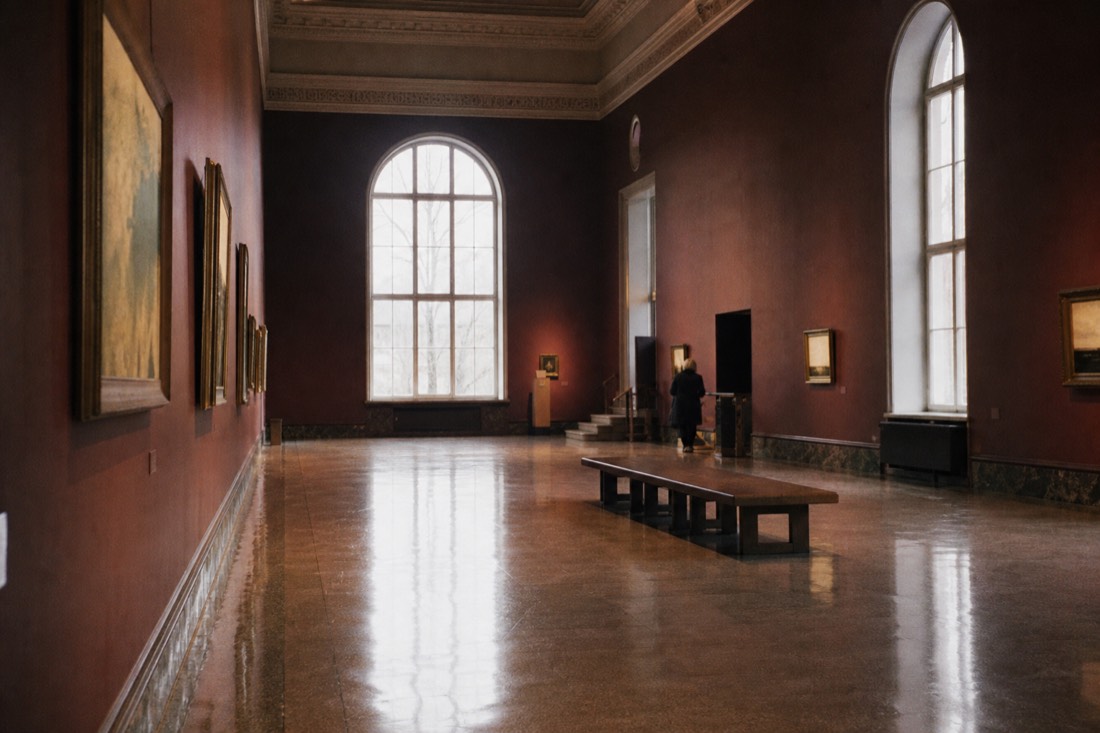
The set pieces are the grand 1879 assembly hall where the labour movement met, a preserved working-class family apartment furnished across the decades, and an original 1892 coffee and beer hall in the basement. Around them run social-history exhibitions on everyday life, industry and the welfare state. It is a human counterpoint to the city's palaces.
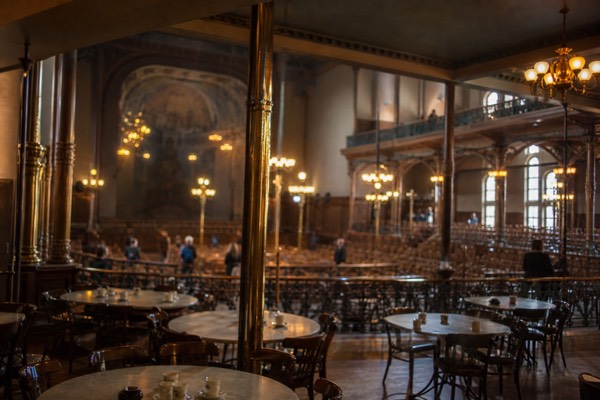
The Festsalen, the assembly hall, is the heart of the building. This is where Copenhagen's workers held meetings, rallies and celebrations from the 1880s onward, and the decorated hall still carries that weight. Standing in it, you understand that the labour movement here had a physical home, a place to gather that was theirs, at a time when that was far from guaranteed.
The preserved apartment is the part people remember. The museum keeps the home of a real working family, the Sorensens, furnished to show how a Copenhagen household lived through the twentieth century, from cramped early rooms to later comforts. Small details do the work: the shared beds, the coal range, the careful arrangement of very little. It is quietly moving in a way a grand palace rarely is.
Down in the basement, the 1892 coffee and beer hall has been kept as a period room, and you can still sit for a coffee among the old fittings. Upstairs, changing exhibitions dig into strikes, working conditions, women's labour, immigration and the building of the Danish welfare state. There is often a recreated shop or street scene, which helps children read the past as well as adults.
Look for the way the building layers time. The 1879 hall was purpose-built for the movement, the apartment tracks a single family across generations, and the basement cafe preserves the social life that went with the political meetings. Few museums let you stand inside all three at once, the gathering, the home and the pub, within a few flights of stairs, and that is what makes the visit stick.
How do Workers Museum tickets work?
The Workers Museum sells its own tickets through the museum. A standard adult ticket is around 135 DKK, and under-18s enter free. There is one ticket for the whole museum: the assembly hall, the family apartment, the historic beer hall and the current exhibitions. Buy on the door or on the museum's own website.
This is an independent museum rather than an attraction you need to book far ahead, so there is no timed-slot pressure and no need to rush a purchase. You can walk up and buy at the desk on the day, or get your ticket in advance on the museum's site if you prefer. Prices and any concession rates are set by the museum and shown on its own booking page.
Because it rarely draws the queues that the palaces do, a door ticket is usually the simplest option. If you want to confirm the current adult price, opening times or any family and concession rates before you travel, the museum lists them on its own plan-your-visit page. Under-18s go free, which keeps it affordable for families.
Ticket
Price (2026)
Notes
Adult
Around 135 DKK
Covers the whole museum
Under 18
Free
Full access
Where to buy
Door or arbejdermuseet.dk
No timed slots needed
Concessions
See official site
Rates set by the museum
How long do you need at the Workers Museum?
Plan about one to two hours. An hour covers the assembly hall, the family apartment and the basement beer hall at a relaxed pace. Give it closer to two if you read the social-history exhibitions in full or stop for a coffee in the period cafe. It is a mid-sized museum that rewards attention rather than a fast walk-through.
A good route starts with the assembly hall to set the scene, moves into the preserved apartment, then works through the changing exhibitions before finishing in the 1892 basement cafe. The apartment is the emotional centre, so it is worth slowing down there and reading the small labels, which carry the details that bring the rooms to life.
The museum works well as a change of pace between grander stops. After a morning of crown jewels and reception rooms, an hour here shifts the story from monarchy to the people who actually built the modern city, and children often respond to the everyday objects more than to thrones. The period cafe is a genuine one, not a gift-shop add-on, so it makes a natural break.
Solo visitors and couples tend to linger over the exhibitions and the apartment, while families move faster through the displays but stop longer at the recreated shop and street scene. Either way the museum is easy to read, with good English labelling throughout, so nobody feels rushed or lost between the floors.
Who is the Workers Museum for?
It suits anyone who wants the other side of Copenhagen's story, the lives behind the grand facades. Social-history travellers, families, and readers curious about how the modern welfare state was built get the most from it. If you have had your fill of thrones and crown jewels, an hour here resets the whole picture of the city.
The museum grew out of the labour movement itself, and it still tells that history from the inside. Rather than framing workers as a subject studied from above, it presents their meeting hall, their homes and their cafe as they were, and lets the ordinary objects speak. That point of view is unusual among the city's museums and is exactly what makes it worth an hour.
It also lands well with children in a low-key way. The furnished apartment, the old shop and the period cafe are concrete and familiar, closer to a child's own world than a hall of regalia, so younger visitors often engage more here than in a formal gallery. With under-18 entry free, it is an easy, affordable stop to slot into a family day around the King's Garden.
What it is not is a blockbuster. There are no crowds to beat and no single famous object drawing the room, and that is the appeal. You get an unhurried, thoughtful museum that tends to stay with people longer than they expect, and it rewards curiosity rather than a checklist.
Know before you go: hours, closed days and getting there
The Workers Museum is at Romersgade 22 in central Copenhagen, a short walk from Norreport station. It opens daily 10:00 to 17:00, with late opening until 20:00 on Thursdays. Under-18s enter free. Because it is a compact city-centre museum, it is easy to fit around other stops near the King's Garden.
Norreport is the nearest station and one of the best connected in the city, served by the Metro, the S-train and regional trains, so almost any hotel reaches it in minutes. From there it is a five-minute walk past Israels Plads to the museum. Several buses also stop nearby, and the flat, central streets make it an easy approach on foot.
The neighbourhood is worth a moment too. Romersgade runs beside Israels Plads and the covered market at Torvehallerne, so it is easy to fold a food stop into the visit, and the King's Garden is only a few minutes further on. That makes the museum a natural anchor for a relaxed half-day in this part of the centre.
A few notes. The building is historic, so check the museum's site if step-free access matters for your group. Coats and bags go in the cloakroom, and the Thursday late opening is handy if you want a quieter early-evening visit. The at-a-glance table sums up the essentials, and current hours sit on the museum's own site.
At a glance
Detail
Address
Romersgade 22, central Copenhagen
Nearest station
Norreport (Metro, S-train, regional), 5 min walk
Hours
Daily 10:00-17:00, Thursdays to 20:00
Under 18
Free entry
Tickets
Door or arbejdermuseet.dk
Around 135 DKK
Standard adult
What can you pair with the Workers Museum nearby?
The museum sits close to the King's Garden, so it pairs well with the royal and national sights a short walk away. Rosenborg Castle and its crown jewels are about ten minutes on foot, the National Museum of Denmark is a little further south, and the free David Collection is nearby for anyone who wants a quiet, no-cost stop.
For a contrast in the same morning, walk over to Rosenborg Castle in the King's Garden, where the crown jewels sit in the basement treasury. The jump from a workers' apartment to a royal treasury, ten minutes apart, is one of the more telling walks in the city. Further south, the National Museum of Denmark sets the wider national story around the labour history you have just seen.
If you would rather stay free, the David Collection nearby holds a world-class Islamic art collection at no charge and rarely feels crowded. For anyone planning several paid stops over a couple of days, the Copenhagen Card can bring the cost down across the royal sights, and you can check what it covers on the Copenhagen Card site.
Questions people ask
How much does the Workers Museum cost?
A standard adult ticket is around 135 DKK, and under-18s enter free. One ticket covers the whole museum, including the assembly hall, the preserved apartment, the 1892 beer hall and the current exhibitions. Check the museum's own site for the exact current price and any concessions.
Where do I buy Workers Museum tickets?
You can buy at the door or in advance on the museum's own website, arbejdermuseet.dk. There are no timed entry slots, so a door ticket is usually the simplest option unless you prefer to book ahead.
What is there to see at the Workers Museum?
The highlights are the grand 1879 assembly hall, a preserved working-class family apartment furnished across the twentieth century, and an original 1892 coffee and beer hall in the basement, plus changing exhibitions on everyday life, industry and the welfare state.
How long should I spend at the Workers Museum?
About one to two hours. An hour covers the assembly hall, the apartment and the basement cafe, while two hours suits anyone reading the social-history exhibitions in full or stopping for a coffee in the period beer hall.
Is the Workers Museum good for children?
Yes, in an everyday way. Children often connect with the furnished apartment and recreated street scenes more than with grand palaces, and under-18s enter free. It makes a good change of pace between larger royal sights nearby.
What are the Workers Museum opening hours?
The museum opens daily 10:00 to 17:00, with late opening until 20:00 on Thursdays. Because hours can change around holidays, confirm the exact date on the museum's own site before visiting.
How do I get to the Workers Museum?
It is at Romersgade 22, a five-minute walk from Norreport station, which is served by the Metro, S-train and regional trains. Several buses also stop nearby, and the surrounding streets are flat and central.
Central Copenhagen, Slotsholmen · Five centuries of arms in the Royal Arsenal
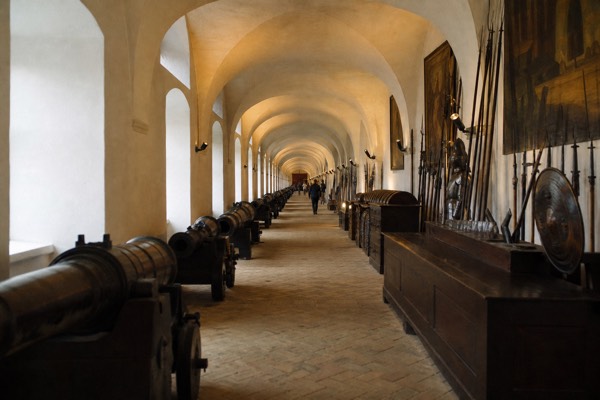
Housed in Christian IV's 1604 Royal Arsenal, with a 163-metre cannon hall on the ground floor and 500 years of Danish military history above. Quieter than the big-name palaces and consistently well reviewed.
Central Copenhagen, Frederiksholms Kanal · Denmark's story from the Vikings to now
Denmark's largest cultural-history museum runs from Stone Age tools and the Sun Chariot through a world-class Viking hall and into ethnographic and modern collections. Adult admission is now paid; under-18s go free.
Rungsted (day trip, ~30 min by train) · Out of Africa, at the writer's home
The coastal home at Rungsted where Karen Blixen, the author of Out of Africa, was born, wrote and is buried. The house is kept as she left it, set in a bird sanctuary that runs down toward the sound.