Is the Copenhagen Card Worth It?
Real 2026 prices and honest break-even math on the Copenhagen Card: how many museums you need to visit before it pays off, and who should skip it.
 By Anders Nielsen, Copenhagen Museums Specialist & Cultural Guide
The number that stops most people is 1,039 kroner. That is the 2026 price of a 72-hour Copenhagen Card, and it looks steep next to a single museum ticket at 150. I get asked whether it pays off almost daily, usually by travellers doing quick sums in their heads at a hostel breakfast. The honest answer is not a flat yes. It depends on how many places you actually plan to enter.
Is the Copenhagen Card worth it?
For most museum-minded visitors, yes. If you plan to enter three or more paid attractions in a day, or six or more across a long weekend, the card usually beats buying tickets one by one, and it folds in all your transport on top. If you are a slow traveller who wants one museum and a lot of cafe time, buy single tickets instead.
The card is not magic. It is a bulk discount that only rewards you if you use it hard. So the real question is not "is it worth it" in the abstract, but "will I hit the break-even point on my kind of trip." Let me put the actual figures on the table and let you decide.
How much does the Copenhagen Card cost in 2026?
The Copenhagen Card comes in five lengths. Adult prices in 2026 run from 589 DKK for 24 hours up to 1,419 DKK for 120 hours, with the popular 72-hour version at 1,039 DKK. One adult can bring up to two children under 12 free for transport, though each child needs their own card.
Here are the current adult prices for the all-inclusive Discover version, the one that bundles 80-plus attractions with unlimited public transport. These are the live 2026 figures from the official pricing page.
| Card length | Adult price (DKK) | Rough EUR / USD |
|---|---|---|
| 24 hours | 589 | ~79 EUR / ~92 USD |
| 48 hours | 859 | ~115 EUR / ~134 USD |
| 72 hours | 1,039 | ~139 EUR / ~162 USD |
| 96 hours | 1,219 | ~164 EUR / ~190 USD |
| 120 hours | 1,419 | ~190 EUR / ~222 USD |
The clock starts the first time you use the card, not at midnight, so a 72-hour card bought at 1pm on Friday runs until 1pm on Monday. You can see the full price grid and any live changes on the official Copenhagen Card prices page. Prices there are shown in kroner first, with euro and dollar equivalents underneath.
How many museums do you need to visit to break even?
Fewer than most people expect. With single adult entries running 125 to 225 DKK, a 24-hour card at 589 DKK breaks even at roughly three paid attractions plus your transport. A 72-hour card at 1,039 DKK breaks even at around six entries plus a day trip. Beyond that point, every extra museum is effectively free.
The math works because Copenhagen's headline attractions are not cheap on their own. Look at what a handful of the card's included sights cost when you pay at the door in 2026.
| Attraction (included on the card) | 2026 adult door price (DKK) |
|---|---|
| Christiansborg Palace, full palace ticket | 225 |
| Rosenborg Castle | 150 |
| National Museum of Denmark | 150 |
| Ny Carlsberg Glyptotek | 150 |
| Kronborg Castle, Helsingor | 150 |
| Louisiana Museum, Humlebaek | 145 |
| Amalienborg Museum | 135 |
| Frederiksborg Castle, Hillerod | 125 |
Stack three of those in a single day, say Christiansborg, Rosenborg and the National Museum, and you have already spent 525 DKK before a single bus ride. Add the transport you would have bought anyway and you are past the 589 price of the 24-hour card. The pattern only gets stronger over three days, because the card also carries you out to the castle day trips for no extra fare. A visitor doing Rosenborg, Christiansborg, the National Museum, the Glyptotek and a trip to Kronborg clears 1,039 DKK in entries alone.
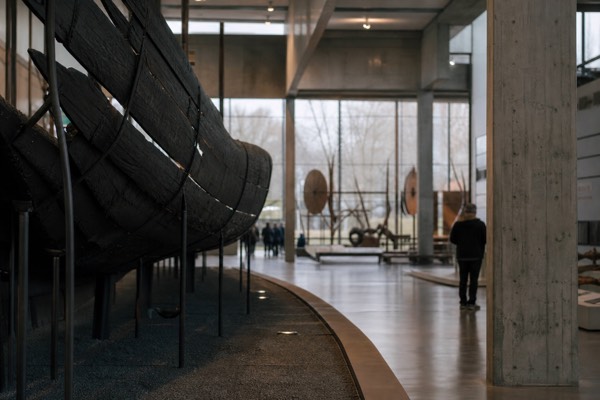
Booking the busiest sights ahead of time still helps you skip the desk queue even with a card in your pocket. If the National Museum's Viking hall is a fixed point of your trip, you can reserve the National Museum of Denmark in advance and check availability for a morning slot before the tour buses arrive.
What does the Copenhagen Card actually include?
Two things: free entry to more than 80 attractions, and unlimited public transport across the entire Capital Region, zones 1 to 99. That covers buses, the Metro, the S-train, harbour buses, the airport Metro, and the regional trains out to the castle towns. Transport alone can justify a good part of the price.
The transport half is the quietly valuable part. Because the card works in every zone from 1 to 99, the same pass that moves you around the city centre also takes you north to Humlebaek for Louisiana, to Hillerod for Frederiksborg, and to Helsingor for Kronborg, with no separate ticket. It even covers the Metro line from the airport, so the card can start working the moment you land.
On the attractions side, the roster reads like a greatest-hits list of the city: Rosenborg and its crown jewels, Christiansborg, the National Museum, Amalienborg, the Glyptotek, the Design Museum, Tivoli's garden entry, Experimentarium and both big castle museums outside town. One honest gap to flag: the Blue Planet aquarium is not on the card, so if that is a priority you will pay for it separately. The full, current list lives on the Copenhagen Card site, and it is worth a scan against your own shortlist.

Do children need their own Copenhagen Card?
Yes, each child needs a card, but they are cheap and one adult brings up to two children under 12 free on transport. A child's 24-hour card starts around 100 DKK, and infants under three ride free with no card. Because under-18s already enter most museums free, a family's real saving concentrates in the adults' passes.
The family math works differently from the solo math, and usually in your favour. Every traveller carries their own card, but the children's version is a fraction of the adult price, and it still folds in all the attraction entries and transport a child would otherwise need. For a family with two young children, the two adult cards do most of the heavy lifting.
Two details are worth pinning down before you buy. First, under-18s go free at almost every paid museum here, so the child card is really buying transport and the odd child-priced attraction rather than museum entry. Second, the free-transport allowance lets one adult bring two under-12s along for the ride at no cost, which can mean you buy fewer child cards than you expected. Check the current child prices on the official prices page, since the children's tiers sit just below the adult ones.
Who should buy the Copenhagen Card, and who should skip it?
Buy it if you are a fast-moving sightseer, a family, or anyone planning several museums and a castle day trip. Skip it if you want a slow trip built around one or two places, if you qualify for free entry as an under-18, or if your must-see list is mostly free museums and things the card does not cover.
The card rewards momentum. Travellers who treat Copenhagen as a checklist, three or four sights a day plus constant transport, extract real value and stop thinking about ticket prices entirely. Families do especially well, since a paying adult brings young children along on transport for nothing.
It is the wrong tool for a certain kind of trip, and I would rather say so. If your ideal day is one long morning at the Glyptotek followed by an afternoon of walking and coffee, single tickets are cheaper and you lose nothing. Under-18s already enter almost every paid museum free, so a teenager rarely needs a card at all. And if half your list is genuinely free, like the David Collection, or sits outside the card's coverage, the sums stop favouring the pass.
Is the 72-hour card the best value?
For a typical three-day city break, yes. The 72-hour card at 1,039 DKK matches the length of most trips and clears its break-even with an ordinary museum-and-day-trip itinerary. Shorter cards suit a single packed day; the 96 and 120-hour cards only pay off if you keep the same fast pace for four or five days.
Length is really a question of pace, not days. The 24-hour card is a sprinter's tool, ideal if you land in the morning and want to blitz the centre before dinner. The 72-hour card is the all-rounder, giving you two full city days plus one day trip out to Kronborg or Frederiksborg, which is exactly the shape of the trip most first-timers take.
The longer cards demand discipline. A 120-hour card at 1,419 DKK is excellent value on paper, but only if you actually visit museums on all five days rather than fading into aimless wandering by day four. Be honest about your own stamina. If you know you will want a slow day mid-trip, a shorter card plus one or two single tickets often works out cheaper. For a fuller cost breakdown and sample routes, see my longer Copenhagen Card guide, and if you are weighing it against a plain transport ticket, the card versus City Pass comparison lays that out.

Run your own numbers against the price table above, count the sights you truly intend to enter, and the verdict falls out on its own. For an active museum trip, the card almost always wins. For a slow one, it will not. Start your planning with the museums you would pay full price for anyway.